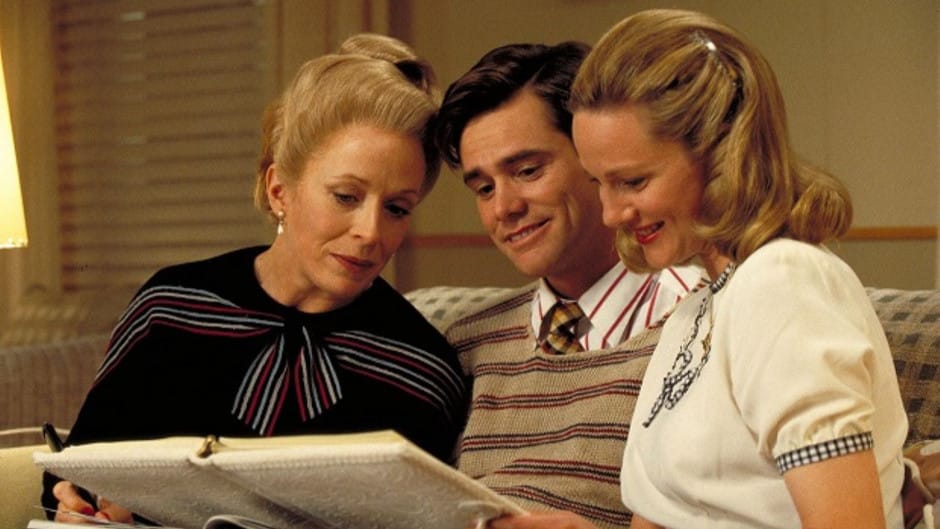
The 1998 Jim Carrey film The Truman Show, focusing on a man whose entire life is being filmed, and its iconic line, "Good morning, and if I don't see you... good evening, good night!", have remained relevant for 25 years.
In the film, Truman is unaware that his entire life is a lie being watched by millions. Released in 1998, this unique science fiction psychological comedy-drama about a man living in a reality fabricated by TV producers caused a sensation upon its release. But it seems the film was quite prescient.
CULTURAL CONCERNS EMBODIED
In her article, Emily Maskell writes, "In the years that followed, the ubiquitous surveillance, mass voyeurism, and the reality TV craze sweeping the world embodied countless cultural anxieties about the existential dilemmas of living for the viewer." Written by Andrew Niccol and directed by Peter Weir, the film grossed approximately $264 million worldwide and earned three Academy Award nominations. Truman's life, chosen to be shown from the moment he was born, is monitored by 5,000 cameras placed all around his "hometown" Seahaven Island, broadcasting his life to 1.5 billion loyal viewers 24/7.
I DIDN'T EXPECT THIS MUCH
Speaking to BBC Culture, Weir says that despite the film's topicality, he didn't expect The Truman Show to be so successful. "I didn't know that the reality TV tsunami was just below the horizon," Weir says.
Reality television was in its infancy when The Truman Show was made, but it was the Dutch format Big Brother, in which ordinary people were forced to share the same house for weeks, that would turn the genre into a global phenomenon.
Weir recalls a comment from the creator of Big Brother that "the show was in the planning stages when the film was released." Weir says, "He said something like, 'When I saw Truman, I thought we should get moving.' Big Brother came out about a year later."
FROM TRUMAN TO BIG BROTHER AND SOCIAL MEDIA CULTURE
However, the Truman Show's accurate prediction is not limited to Big Brother. Maskell says, "The Truman Show's commentary on living under constant surveillance was a harbinger not only of the reality TV era but of the entire social media culture."
HOW REAL IS IT?
At this point, Maskell adds the following comment:
"As with reality shows, the 'reality' of The Truman Show is constructed by the producers who dictate what happens in Truman's closed world. The megalomaniac creator of The Truman Show, Christof (Ed Harris), has a despotic eye that controls everything. Truman's encounters with passersby and acquaintances are meticulously rehearsed so that his interactions with the world appear organic.
This ambiguity about what is 'real' and what is fake lies at the heart of today's slippery media culture, from the Kardashians to Instagram Lives. As viewers crave reality, the reality of the 'reality' presented to them is questionable, mixed with producer directives, product placement, social media filters, and more. Meanwhile, those participating in reality TV often exhibit a level of performativity, as they are aware that cameras are following them." LIVING YOUR LIFE TO ENTERTAIN OTHERS...
Another comment in the article is as follows: The Truman Show also formulates how life can be lived to entertain others. Thanks to widespread access to online platforms, we can all now be Trumans.
The phenomenon of self-broadcasting has become widespread; through Twitter, Instagram, Facebook, TikTok, and many more, you can provide an online audience with an endless stream of life's soap opera.
We can all fall prey to the very common Main Character Syndrome, a social media abbreviation used for those who narcissistically imagine themselves as the main characters of their own life stories and the people around them as supporting characters...
Source: https://www.chip.com.tr/guncel/1998de-yayinlanmisti-gelecegi-en-iyi-tahmin-eden-film-olabilir_157770.html