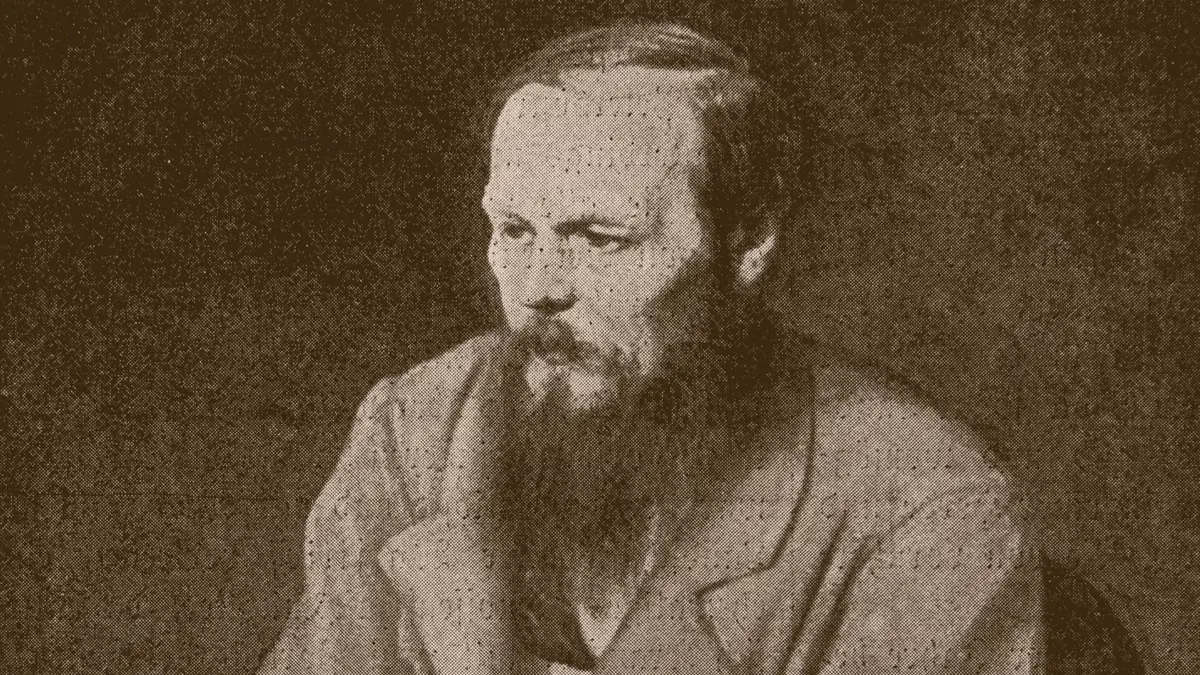
"White Nights," penned in the 19th century by Fyodor Dostoevsky—one of the most important figures in Russian literature—has returned to the bestseller lists nearly 180 years later, thanks to social media. The "BookTok" trend on TikTok has turned this work, which explores themes of love and loneliness, into a new favorite, particularly among Gen Z.
Sales of "White Nights"—one of Dostoevsky's earliest works—have surged by 463 percent in Brazil over the past year. Interest in the book is also rising rapidly in the UK and Spain.
GEN Z SEES THEMSELVES IN THE "LONELY DREAMER"
"White Nights" tells the story of a lonely dreamer wandering the streets of Saint Petersburg who encounters a young woman and quickly falls in love with her.
The story follows the narrator—who has lived within his dreams—as he confronts real life for the first time over the course of four nights and one morning. However, the ensuing love story proves to be as short-lived as it is intense.
According to Marcelo Nogueira, a Brazilian book content creator with 13,000 followers on TikTok, the reason the work resonates with young people nearly two centuries later lies in the feeling of loneliness.
Nogueira noted that Gen Z readers see reflections of themselves in Dostoevsky's "lonely dreamer" character, adding that many young people today feel the same way.
BOOKTOK DISCOVERS DOSTOEVSKY
Tens of thousands of comments and videos regarding "White Nights" have been shared on BookTok, TikTok's book community.
Paloma Lima, a 29-year-old creator of content on Russian literature, explained that young TikTok users who read White Nights have been flocking to her YouTube channel to learn more.
According to Lima, the book's status as a "short and intense" read plays a significant role in its success. The story’s narrative arc—moving from friendship to romance—also aligns with the romantic tropes popular on TikTok.
YOUNG PEOPLE IN RUSSIA DON'T SHOW THE SAME INTEREST
Dostoevsky’s resurgence in popularity among the social media generation has been met with a mix of surprise and pride in Russia.
However, it is noted that this same level of interest is not observed among young Russian readers.
Ekaterina Kvitko, a 28-year-old Russian author, pointed out that the work depicts a character searching for love and something to hold onto amidst loneliness; she suggested that this sentiment might be resonating more strongly with Western youth at the moment.
FROM "WHITE NIGHTS" TO "CRIME AND PUNISHMENT"
For some young readers, White Nights has also become a gateway to Dostoevsky’s more expansive works.
Danilo Hora, from the Brazilian publishing house Editora 34, revealed that sales of Dostoevsky’s novel Crime and Punishment rose by 53 percent in the first seven months of the year.
Hora described the trend of young people moving on to Dostoevsky’s more challenging and extensive novels after discovering him through a shorter work as an "unexpected" development.
IS SOCIAL MEDIA KILLING READING OR REVIVING IT?
Short TikTok and YouTube videos have long been criticized for shortening attention spans and weakening reading habits. However, the case of White Nights demonstrates that these same platforms can also introduce classic literature to a new audience.
According to Nogueira, the very act of "being a reader" has evolved into an aesthetic on TikTok.
This aesthetic also influences young people to gravitate toward physical books rather than digital ones; editions featuring eye-catching, colorful covers garner more attention in social media posts.
It has been reported that the edition of White Nights featured in Nogueira's video—which bears a pop-art style illustration of a kissing couple—has sold out at many bookstores in Rio de Janeiro.
CRITICISM OR ADVERTISEMENT?
Cecilia Rosas, a researcher of Russian literature and a translator, welcomed the fact that social media is boosting interest in classic works.
However, Rosas warned that book-related content on social media can blur the line between literary criticism and promotion.
According to Rosas, some content presented online as literary criticism is, in reality, essentially an "advertisement."
Nevertheless, the rise of White Nights shows that a story of loneliness and love—dating back nearly two centuries—can be rediscovered by a completely different generation in the age of algorithms.
Source: https://www.ntv.com.tr/dunya/iletisim-baskani-durandan-israilli-bakan-katza-sert-tepki-seviyesiz-ve-hadsiz-ifadeler-1743331